7 Ways to Prevent Roaches in Your NYC Kitchen
Practical tips to keep your kitchen roach-free, from proper food storage to sealing entry points around pipes and cabinets.
Cockroaches are unfortunately common in New York City, but that doesn't mean you have to live with them. NYC's two most prevalent species — the German cockroach (small, light brown, found indoors) and the American cockroach (large, reddish-brown, often in basements) — require slightly different strategies, but the fundamentals of prevention are the same.
Why Roaches Love NYC Kitchens
Your kitchen offers the roach trifecta: food, water, and warmth. In a city where apartments share walls, plumbing, and ductwork, roaches travel freely between units. Even the cleanest kitchen can attract roaches migrating from a neighbor's space. That said, reducing attractants in your own unit dramatically lowers the odds of a persistent problem.
1. Eliminate Food Sources
Roaches can survive on remarkably small amounts of food — even grease residue on a stovetop.
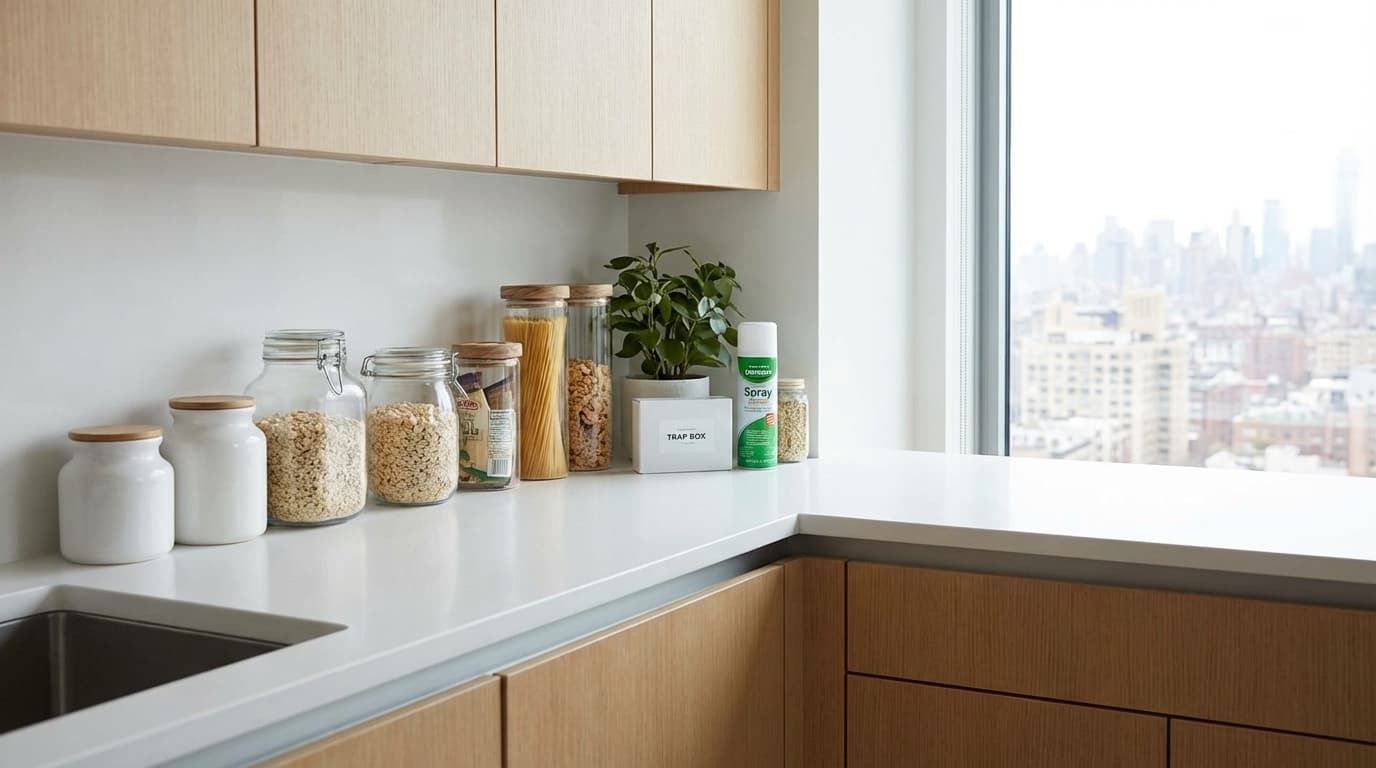
- Store all dry goods (cereal, flour, sugar, rice, pasta) in airtight glass or hard-plastic containers
- Never leave dirty dishes in the sink overnight
- Wipe down counters, stovetops, and backsplashes after every meal
- Sweep or vacuum floors daily, paying special attention to under appliances and along baseboards
- Take out garbage every evening and use bins with tight-fitting lids
- Clean pet food bowls after feeding — don't leave kibble out overnight
2. Remove Water Sources
Roaches can survive weeks without food but only about a week without water. Cutting off water access is one of the most effective prevention strategies.
- Fix leaky faucets, pipes, and P-traps immediately
- Don't let water pool in the sink, under the refrigerator, or around the dishwasher
- Wipe down wet sinks and counters before bed
- Empty and dry pet water bowls overnight
- Check for condensation on cold-water pipes and insulate them if needed
3. Seal Entry Points
German roaches can fit through a gap as thin as a dime. A thorough seal-up makes your kitchen far less accessible.
- Caulk all gaps where pipes enter from the wall (under sinks, behind dishwasher, around radiator pipes)
- Seal cracks where cabinets meet walls and floors
- Fill gaps around electrical outlets and light switch plates
- Install fine mesh screens over drain openings
- Check and seal around windows, especially in older buildings
4. Reduce Clutter and Harborage
Roaches prefer tight, dark hiding spots close to food and water.
- Organize the pantry and remove unused items regularly
- Don't store paper bags, cardboard boxes, or stacks of newspaper — roaches eat the glue and hide in the corrugation
- Keep recyclables in sealed bins, not loose bags
- Avoid lining shelves with contact paper — roaches hide underneath it
5. Deep Clean on a Schedule
Consistency beats intensity. A regular cleaning routine removes the micro-deposits of grease and crumbs that sustain roach populations.
- Daily: Wipe counters, sweep floor, clean dishes, take out garbage
- Weekly: Mop floors, clean inside microwave and oven, wipe cabinet fronts
- Monthly: Pull out refrigerator and stove to clean behind and underneath; clean inside the oven, the range hood filter, and the drip trays
- Quarterly: Empty and wipe the inside of all cabinets; inspect for droppings or egg cases
6. Use Preventive Treatments Strategically
While you should hire a professional for active infestations, a few low-risk products can help with prevention.
- Gel bait stations placed in corners under the sink and behind appliances can catch scouts before they establish a colony
- Boric acid powder (applied thinly in crevices where roaches travel, out of reach of children and pets) is effective and long-lasting
- Avoid over-the-counter sprays — they scatter roaches to new hiding spots and rarely solve the problem
7. Coordinate with Neighbors and Building Management
In NYC apartment buildings, solo efforts hit a ceiling. Roaches simply migrate between units through shared walls and plumbing chases.
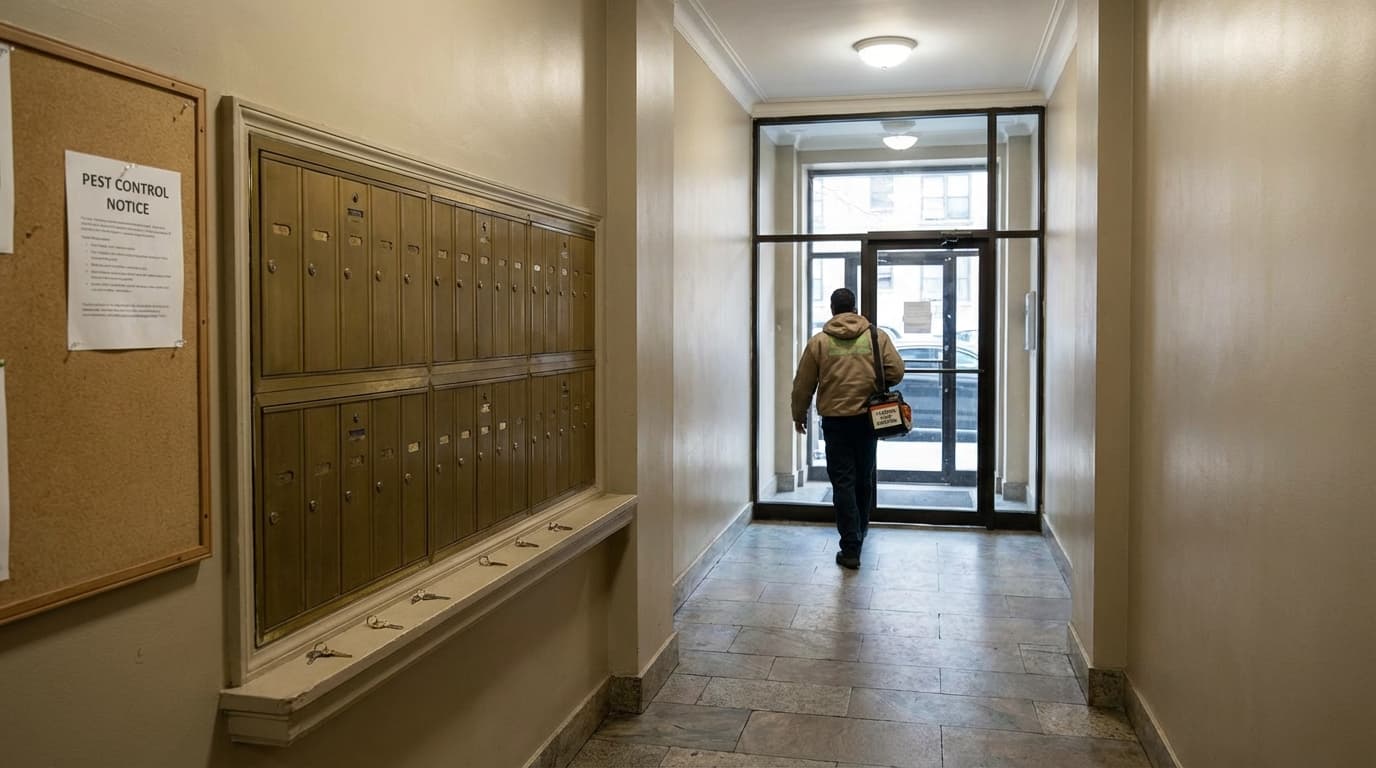
- Report sightings to building management promptly — NYC housing law requires landlords to address pest issues
- Ask your building to schedule building-wide treatments, not just individual units
- Encourage neighbors to follow the same prevention steps
- If you're in a co-op or condo, advocate for an Integrated Pest Management (IPM) contract for the whole building
When to Call a Professional
If you're seeing roaches regularly despite consistent prevention, or if you find egg cases (small, dark brown, capsule-shaped), the colony is established and growing. Professional treatment with targeted baits, growth regulators, and monitoring is far more effective than DIY sprays.
Need Professional Help?
Our licensed technicians can solve your pest problem quickly.