How to Identify a Bed Bug Infestation in Your NYC Apartment
Learn the telltale signs of bed bugs and what to look for in your mattress, furniture, and bedding before the problem gets worse.
Bed bugs are one of the most common pest problems in New York City apartments. These tiny, reddish-brown insects are expert hitchhikers and can easily spread from unit to unit in multi-family buildings. Knowing how to identify an infestation early is the single most important factor in keeping treatment costs low and preventing a building-wide outbreak.
Why Bed Bugs Thrive in NYC
New York City is a perfect environment for bed bugs. High population density, frequent travel, shared laundry rooms, secondhand furniture markets, and multi-unit apartment buildings all create pathways for these pests to spread. In fact, NYC consistently ranks among the top three U.S. cities for bed bug infestations.
Unlike roaches, bed bugs have nothing to do with cleanliness. A spotless penthouse is just as vulnerable as a cluttered studio — all bed bugs need is access to a sleeping human host.
Signs of Bed Bug Activity
The first sign most people notice is waking up with itchy, red bites in a line or cluster pattern. However, roughly 30% of people show no reaction to bed bug bites at all, so you cannot rely on bites alone. Look for these physical clues:
Visual Evidence on Bedding
- Dark fecal spots: Tiny black or dark brown dots on sheets, pillowcases, and mattress seams — this is bed bug excrement and may bleed on fabric like a marker
- Rusty blood stains: Crushed bed bugs leave reddish-brown smears on sheets when you roll onto them in your sleep
- Eggs and eggshells: Tiny (about 1mm) pearl-white ovals, often found in clusters along seams and crevices
- Shed skins: Pale yellow, translucent exoskeletons left behind as nymphs molt through five growth stages
- Live bugs: Adults are flat, oval-shaped, and roughly the size of an apple seed; nymphs are smaller and nearly translucent until they feed
Unusual Odors
In heavier infestations, bed bugs release alarm pheromones that produce a sweet, musty smell often compared to coriander or overripe raspberries. If you notice a persistent, unexplained odor near your bed, it warrants investigation.
Where Bed Bugs Hide
Bed bugs are nocturnal and spend roughly 90% of their time hiding. A thorough inspection should include:
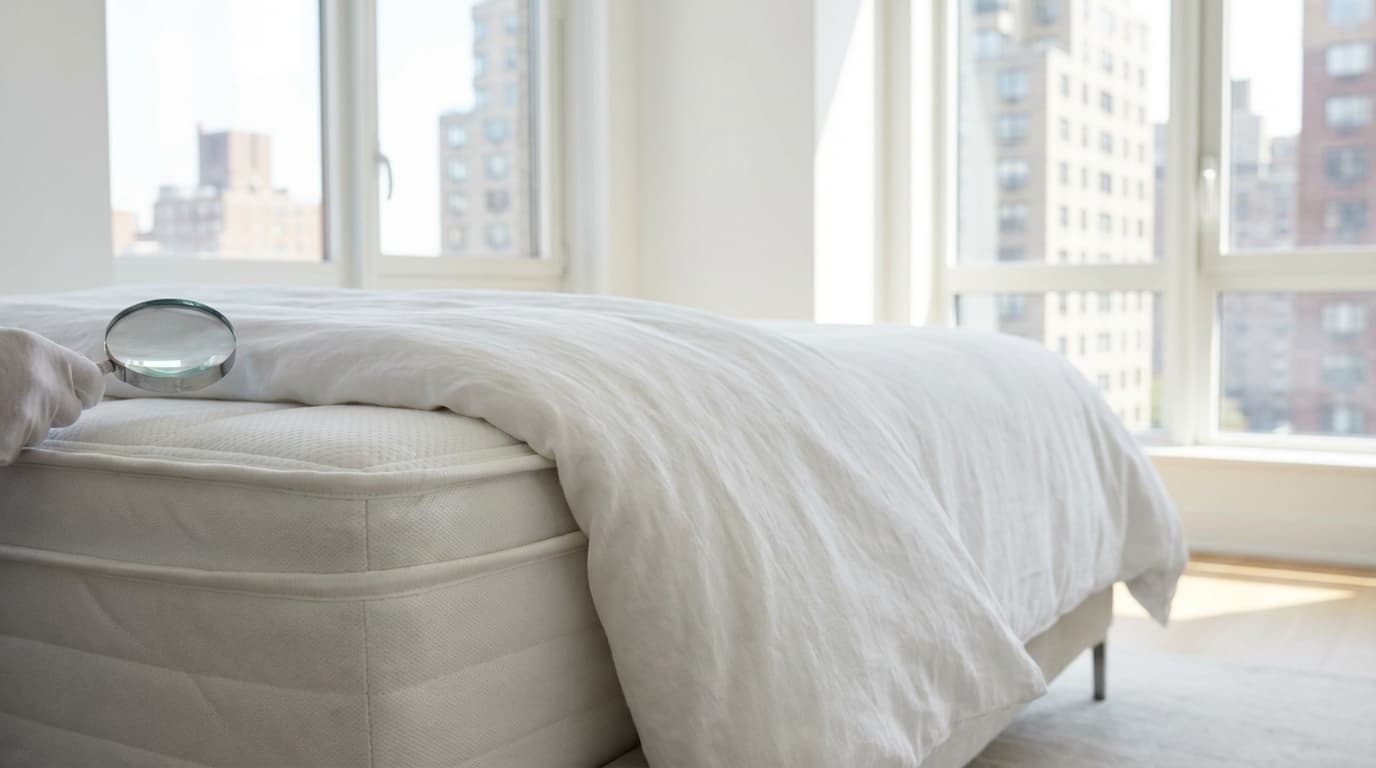
- Mattress seams, tags, and piping — lift and inspect every fold
- Box spring corners and stapled fabric — they often colonize the underside
- Bed frame joints and cracks — disassemble if possible
- Headboard crevices — especially upholstered or wooden headboards
- Behind baseboards near the bed
- Inside electrical outlet covers — a surprisingly common hiding spot in apartments
- Behind picture frames and mirrors on walls near the bed
- In the folds of curtains near sleeping areas
- Inside nightstand drawers and along drawer slides
What to Do If You Find Bed Bugs
- Don't panic — but do act quickly. A single female lays 200–500 eggs in her lifetime, and populations can double every 16 days.
- Don't move to another room — this often spreads the infestation to a new area.
- Don't throw out your mattress — professional treatment can save it in most cases, and dragging an infested mattress through hallways spreads bugs.
- Document the evidence — take photos of any bugs, stains, or bites. This is useful for landlord communication and insurance claims.
- Contact a licensed pest control professional for proper identification and treatment. NYC law requires landlords to pay for bed bug extermination in rental apartments.
Prevention Tips for NYC Residents
- Inspect secondhand furniture thoroughly before bringing it home — especially mattresses, couches, and upholstered chairs
- Use bed bug-proof encasements on mattresses and box springs
- Reduce clutter around sleeping areas to eliminate hiding spots
- Vacuum regularly along baseboards and under beds
- Be cautious when traveling — inspect hotel mattress seams before unpacking and keep luggage on hard surfaces, not the bed or carpet
- After traveling, wash and dry all clothing on high heat before putting it away
- In apartment buildings, seal cracks around baseboards, pipes, and electrical outlets to limit migration from neighboring units
Need Professional Help?
Our licensed technicians can solve your pest problem quickly.